The Roots of Carnival: From Trinidad and Tobago to Toronto
Every costume, rhythm and song at Toronto Caribbean Carnival carries a history. That history begins in the Caribbean, long before the first parade rolled through Toronto.
Where Carnival began
Modern Caribbean carnivals are most often traced to Trinidad and Tobago. The festival emerged from African traditions and from cultural elements brought by French colonizers, whose plantation class staged grand masquerade balls just before Lent. Enslaved Africans answered with celebrations of their own, held in secret and shaped by African music and drumming.
After Emancipation
After Emancipation in 1834, these cultural expressions kept evolving, even in the face of suppression. Tamboo bamboo instruments, made from bamboo plants, evolved into the steelpan. Resistance songs became the satire and social commentary of calypso. The masquerade balls were reshaped into Ole Mas during J’ouvert, the start of carnival, with theatrical costumes that mocked societal norms and political figures.
The rise of the mas band
Through the early and mid-20th century, masquerade became more organized. Parades grew larger and costumes more intricate. In the 1950s and 1960s, band leaders such as George Bailey, Harold Saldenah, Stephen Lee Heung and Edmund Hart brought new approaches to costume design and thematic presentation, setting the stage for the generations of Carnival bands that followed.
Today, Carnival reflects a diverse cultural heritage, with influences from African, Indo-Trinidadian, Chinese, Syrian, Lebanese and European communities.
Carnival comes to Toronto
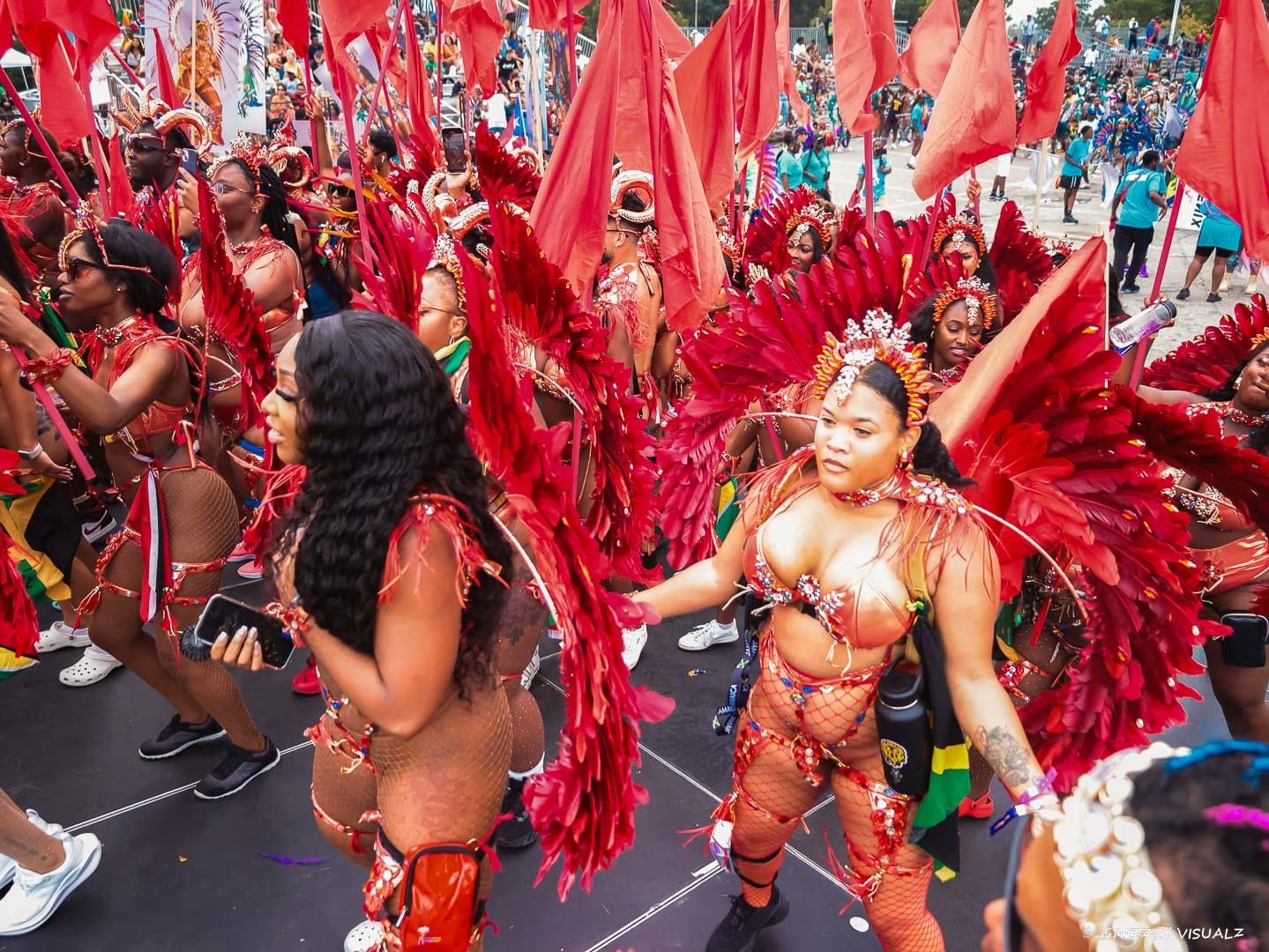
As Caribbean people settled around the world, Carnival travelled with them. In Toronto it began in 1967 as “Caribana,” a community-led initiative to celebrate Canada’s Centennial. The first parade drew 50,000 people and laid the foundation for the festival the city knows today.